


At first glance, corals look like colorful rocks or underwater plants. But looks can be deceiving—corals are, in fact, animals. This often-overlooked fact is key to understanding how coral reefs form, thrive, and face threats in today’s oceans. In this article, we’ll dive deep into what corals really are, how they live, and why they matter.
What Are Corals, Really?
Corals are marine invertebrates that belong to the phylum Cnidaria and the class Anthozoa. Each coral is made up of thousands of tiny, soft-bodied creatures called polyps, which form colonies over time. These polyps build and live inside hard limestone skeletons made of calcium carbonate—this is what eventually creates coral reefs.
Why Are Corals Considered Animals?
Corals are classified as animals for three main reasons:
-
They are heterotrophs – Unlike plants, corals can’t make their own food through photosynthesis. Instead, they capture food from their surroundings.
-
They have a mouth and digestive system – Coral polyps catch tiny plankton with their tentacles and digest it in a central cavity.
-
They have specialized stinging cells (cnidocytes) – Like jellyfish and sea anemones, corals use these cells to stun prey.
These features firmly place corals in the animal kingdom.
Coral Polyps: The Tiny Builders of Reefs
A single coral polyp may be just a few millimeters in size, but it plays a big role in reef construction. Here’s how:
-
Tentacles: Equipped with stinging cells to capture food.
-
Mouth and stomach: Used to ingest and digest prey.
-
Calcium carbonate skeleton: Secreted beneath the polyp, this structure becomes the base of the reef.
Thousands of polyps work together in colonies to build massive, interconnected reef systems.
A Critical Partnership: Corals and Algae
Most reef-building corals have a vital relationship with microscopic algae called zooxanthellae, which live inside their tissues. This symbiosis is the secret to coral success:
-
The algae use sunlight to perform photosynthesis, producing nutrients that feed the coral.
-
In return, the coral provides the algae with shelter and access to waste products like CO₂, which the algae need to photosynthesize.
This partnership helps corals grow faster and thrive in nutrient-poor tropical waters.
How Corals Eat: More Than Just Sunlight
Even with algae providing energy, corals still feed like animals:
-
At night, polyps extend their tentacles to capture plankton.
-
Some corals produce mucus to trap organic particles.
-
This dual feeding strategy—photosynthesis plus active hunting—helps them survive in different conditions.

Reproduction: Building the Next Reef Generation
Corals reproduce in two ways:
1. Sexual Reproduction
-
Corals release eggs and sperm into the water during mass spawning events.
-
Fertilized eggs become free-swimming larvae (planulae), which settle on hard surfaces and grow into new polyps.
2. Asexual Reproduction
-
Individual polyps clone themselves through budding.
-
This allows colonies to grow and repair damage quickly.
Why Coral Reefs Matter
Coral reefs are among the most important ecosystems on Earth:
-
Biodiversity: They support over 25% of all marine life.
-
Coastal Protection: Reefs act as natural barriers against storms and erosion.
-
Livelihoods: Millions rely on reefs for food, tourism, and jobs.
-
Medicine: Coral reef organisms are being used in cancer, pain, and antiviral research.
Without corals, marine ecosystems—and human communities—would suffer greatly.
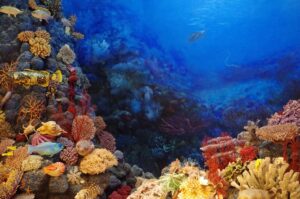
What’s Threatening Coral Reefs?
Corals may look tough, but they’re extremely sensitive to change. Major threats include:
-
Climate Change: Warming oceans cause coral bleaching, where stressed corals expel their algae and turn white.
-
Ocean Acidification: More CO₂ makes it harder for corals to build their skeletons.
-
Pollution: Agricultural runoff, sewage, and plastic all harm coral health.
-
Overfishing: Disrupts the reef ecosystem and removes key species.
-
Destructive Tourism and Development: Physical damage from anchors, construction, and careless divers can be devastating.
Final Thoughts: More Than Just Pretty Rocks
Corals may seem motionless and plant-like, but they’re complex, living animals. Their role in the ocean is massive: building ecosystems, supporting life, and even benefiting humanity. The more we understand them, the better we can protect the reefs they create.
So the next time you see a coral reef, remember—you’re looking at a living city, built by tiny animals with an extraordinary story.
